iceland, gaming, eve online

Last weekend at this time, I was in Iceland. My friend and housemate Matt spent the summer there interning with CCP Games, and I decided to take a long weekend and go visit him on his last full weekend there. (CCP are the people who make EVE Online, the second most popular MMO in the world, and the forthcoming World of Darkness MMO.) Our friend (and soon-to-be housemate) Kate was also there, stopping over on her way back from London.

There were a lot of reasons for me visiting, not least that, in my twenty-five years of existence, I hadn't yet left North America, and I was starting to feel a bit provincial and more importantly a bit bored. Also, I'm a terrible tourist, but surely one can learn these things, right? Besides, it would be fun. And indeed, I had a blast.

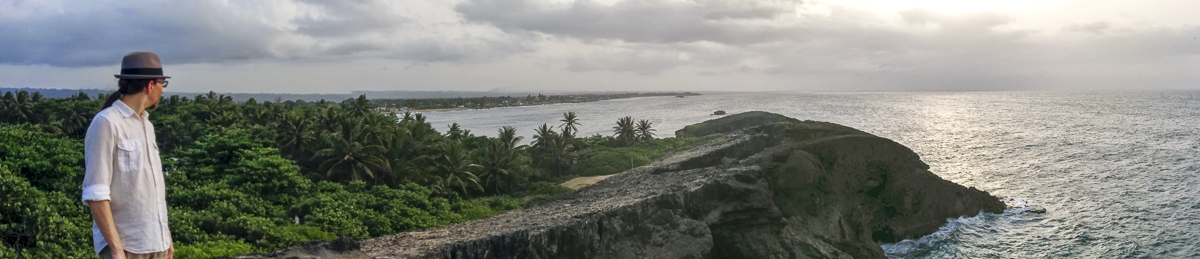
The trip was pretty much entirely comprised of me learning the practicalities of navigating a foreign country, more or less effectively, and hanging out with Matt, Kate, and Matt's coworkers at bars, cafes, restaurants, and apartments in Reykjavik. I had lots of good and sometimes unusual food (lamb hot dogs?), I went to the Laugar geothermal pools and soaked, I watched the fireworks on the harbor for Reykjavik Culture Night, and that was pretty much it. The scenery, even just on the bus from the airport to Reykjavik in the morning, was gorgeous, all ocean and mountains and low-angled light. It was a fascinating trip.

I'd read a lot about EVE, the game Matt's company makes, in computer gaming magazines, but being a student I was really scared of getting into anything that I might be more obsessed with than school. (Hear now the archetypal story of the guy or girl who got kicked out of school because they played too much EverQuestWorld of Warcraft.) I'm no longer a student but I'm of course working, and work is very unlikely to ever be replaced as the prime sink of my time, but I feel like I need be less pathologically risk-averse now, and so I've been considering lots of different ways to spend my free time — auditioning them, perhaps. So when Matt sat me down at his desk in Iceland and showed me around EVE a bit, I was paying attention. (Frankly I've been kind of looking for an excuse to give EVE a go.)

There are lots of reasons that EVE is interesting — it's all a single gigantic world, rather than a bunch of parallel worlds like other MMOs; the economy is entirely player-driven; it's set in space rather than some fantasy world; yadda yadda yadda. That's not the most interesting part of EVE for me. Some background — when I was in middle school, I was in the local equivalent of a Talented and Gifted program, because they didn't know what to do with me (a rant for another day). In eighth grade, as sort of a capstone project, we (well, I, mostly, I think) wrote a space computer game. It wasn't much better-specified than that — I had grand visions of hopping from planet to planet, trading commodities, and maybe some space battle, and I eventually got together an interface inspired by the Star Trek computers, some basic movement, and a "market" with random prices. (I was writing this in Visual Basic, if I recall correctly; I was just discovering C and Linux. Shh, we were all fourteen and living in the boonies at the end of a crappy dialup connection once. Well, okay, some of us were.) We had a group of four or five — a friend did some art, I don't remember if it ever got used or not; we theoretically divvied up tasks somehow, but I think I was the only one with significant programming experience. We tried to keep it going and improve it, after we'd met the (low) requirements for the TAG program, but it went the usual way of such projects. At any rate—

Friends, EVE is that game I was dreaming of. Trade, courier, mine, fight, loot — it's all there. EVE is that middle-school space game, made by professionals. I'm not sure quite why I'm primed for those narratives so hard, but I am, and EVE hits those narrative kinks like whoa.

I may be hooked.

Now, history suggests that I may like starting games more than continuing to play them (what can I say, I just really like tutorial missions ;-), so we'll see if I come back to EVE after a week at work. But this is really kind of exciting — perhaps the most excited I've ever been about a game after I finished the tutorial missions. It could be a wild ride. 🙂

another rant for another day: why I faileddropped microecon twice, or, how how we teach economics sucks (hint: students have never interacted with a real market as either a buyer or, particularly, as a seller)

also, I have no point here, I just like to say "New Game Excitement"

september 2010 asimov’s

Here’s my review of the September 2010 issue of Asimov’s, before I leave it on the plane in the hopes someone else will find it and enjoy it. (It’s a good issue.)

  • “Backlash”, by Nancy Fulda (novelette) — A cute time-traveling retired-spy-back-into-service story, which, unusually for the spy genre, features a reasonably accurate portrayal of said spy dealing with PTSD. (PTSD: It’s not just nicely-cinematic flashbacks.)
  • “The Palace in the Clouds”, by Eugene Mirabelli (short story) — Not to be confused with the cover story, Geoffrey Landis’s The Sultan of the Clouds. It posits an aging steampunk Venice-of-the-sky, which makes for some gorgeous imagery, and goes from there. It’s either inspired by Hayao Miyazaki, or he should totally make a movie of it, or both — the image of a slowly-failing flying city and the main characters, a young boy and his aviator uncle, are all tailor-made for his style. As with Miyazaki, you won’t find any deep philosophy here, more themes of family and growing up, but that’s not a bad thing.
  • “Wheat Rust”, by Benjamin Crowell (novelette) — Does a decent job at a story of a generation ship and the people who live there and their divergent cultures, and notably a story whose stakes are much smaller than The Destruction Of The Entire WorldWShip! (As you might gather from the name, the main characters are trying to prevent an agrigultural plague.)
  • “For Want of a Nail”, by Mary Robinette Kowal (short story) — Another generation ship story, with a bit of interesting generation ship morality, plus some AI morality. AIs used as the collective memory of families over generations.
  • “The Sultan of the Clouds”, by Geoffrey Landis (novella) — Geoffrey Landiss is a NASA scientist, so he obviously does a good job with the geophysics of a colony of floating cities on Mars. Thankfully he does it without letting it overwhelm the story, which has some nice bits of character development and some interesting speculation about alternative family structures a la Heinlein.
  • “The View from the Other Side: Science Fiction in Non-Western/Non-Anglophone Countries”, by Aliette de Bodard (nonfiction) — A follow-up to Norman Spinrad’s obnoxious book review column I complained about back in April. It can be summarized as “why the opinions and perspectives of anyone but white men matter ever 101”, and so pretty basic, but probably useful to start educating the clueless. (sigh)

Currently reading: the latest issue of Apex Magazine, Cat Valente’s first as fiction editor!

name that drink! also, carbonated coffee

I've decided to branch out into a new blog genre here at free dissociation — cocktail blogging. Because frankly I'm a bit tired of SF short fiction reviews, even though I still have New Genre #6 and the latest Ideomancer, whatever its number is, to blather about. (Pandemonium got the September Asimov's in finally! (And the October Analog?) In the meantime I read The Art of War on my phone on the T. Make of this what you will.)

Oh yes, cocktail blogging.

So last weekend we had an Iron Blogger Champagne Brunch, instead of getting together for beer. After we tired of the usual mimosas and so on, and having skinned a fresh pineapple, I concocted this rather interesting beverage:

In a wine glass combine:

  • 1 shot Hendrick's Gin
  • 1 shot St. Germain Elderflower Liquer
  • dry champagne

Finish by floating a wedge of fresh pineaple, and possibly garnish with another wedge stuck on the rim of the glass because it looks cool.

I was actually kind of surprised by how well it worked — the Hendrick's is a smoother gin, but it's still got a definite juniper kick, and the St. Germain was really important to blend that flavor into the fruitiness of the champagne. And of course fresh pineapple is always awesome. I think Liz, our hostess, made her own without the St. Germain, so your mileage may vary.

At any rate, it needs a name. The constituent liquors aren't uncommon, at least around here in the craft cocktail scene, and it's not hugely complicated, so it wouldn't surprise me if somebody else has come up with it independently, but whatever. (God, did I really just write "the craft cocktail scene" unironically? That's maybe taking the whole "cocktail blogging" thing a little too far.) What should I call it?

On the other end of the drink spectrum from alcohol, we made our first batch of carbonated iced coffee last night. A friend of mine got tired of paying for seltzer and so bought his own CO2 cylinder and fittings, and so of course the neighborhood has subsequently been trying to come up with interesting things to carbonate. Last night's experiment was:

  • 2/3 of a bag of old Dunkin' Decaf I had lying around (about 2 C dry), cold-brewed with 14 or so C water for 24 hours
  • 1/2 C sugar

Gas solubility in water goes up pretty much right until you hit freezing, so you want your liquid as cold as possible, and the coffee was pretty strong, so I put a couple dozen ice cubes in it and shook them around to equilibrate the temperature before pouring the coffee into a 2L soda bottle and giving it to my friend, who sealed it up, attached it to the CO2 cylinder, and shook it vigorously for about a minute. The coffee took the carbonation really well, the ratio of sugar to coffee was pretty exactly right to offset the acidity imparted by the carbonation, and everyone present was sufficiently weirded out by it that I don't think it will become an overnight commercial sensation. Oh well. I like it. It's really quite tasty!

So I have a liter of carbonated coffee which is coming with me to work tomorrow, because I've got a long week ahead of me and being up this late isn't a great start to it. (Yes it's decaf, but my caffeine tolerance is low, to say nothing of the other alkaloids present that decaffeination doesn't touch.) Plus a second brewing of the grounds sitting in the fridge which I haven't decided whether I'll ask Mark to carbonate or not. Isn't science great? 🙂

Speaking of being up too late, laundry's done! disappears

lcrw #25

I should be going to bed, and I also should have posted earlier, but such is life. A quick review of the latest issue of Lady Churchill's Rosebud Wristlet, a small but well-regarded magazine published by Small Beer Press of Easthampton, Massachusetts (aka Kelly Link and Gavin Grant), the people who are putting out the new trade paper edition of Ted Chiang's brilliant Stories of Your Life and Others this October. Both Pandemonium and Porter Square Books sell it in hardcopy, or you can get it electronically for not-much money. I think it is consistently the best SF magazine I read, the magazine most likely to give me stories that I like, that I find well-written, that make me think, that discomfort me in a useful way. This latest issue is no exception.

  • "A City of Museums", by Georges-Olivier Châteaureynaud (translated by Edward Gauvin) — Châteaureynaud is a French writer, and this story was written in 1983 but only translated recently; Gauvin has a collection of Châteaureynaud's works in translation (coming?) out from Small Beer Press. It's an odd little story about a city which is made up entirely of museums, and about the "rats" who live in cracks writing, creating art, in the hopes that one day their hideout too will become a museum ("see 'the bed where the author of Sylvie’s Baubles had once lain in state'!") A bit about how artists hope to be remembered, what purpose the creation of art serves and what purpose the memorialization of art serves.
  • "Dear Aunt Gwenda" — a cute little pseudo-advice column.
  • "Fire-Marrow", by Jennifer Linnaea — a blind man lives by a subterranean river, his only contact with the outside world the toy boats his former lover, now dying, sends, magically filled with provisions for him. A gentle sort of meditation on death.
  • "This Is Not Concrete", by Ben Francisco — a suddenly-precognitive girl and her father hunt for the Concrete Man (a figure of animate, well, concrete) which killed her mother and brother. The story works quite well, of course, read literally, and it wasn't until just now that I noticed the pun in the title. Now I need to reread it with that in mind. Even read literally I thought it was the best story in the issue — it reminded me a bit of "The Ghost-Hunter's Beautiful Daughter" from Asimov's some months back.
  • "The Famous Detective and His Telepathy Goggles", by Sean Adams — exactly what it says on the tin. Short, amusing, absurd, steampunk.
  • "Box", by Susannah Mandel (poem) — remarkably vivid and evocative given it's only four lines long. Exemplifies the technical skill (in this case particularly the use of meter) I find lacking in modern poetry.
  • "Circumnavigation, With Dogs", by Richard Gess — could be considered an SF-twist story, not that it's not foreshadowed for the alert reader, and its format is interesting, and I actually liked it quite a bit regardless of the twist. Of course with my current job I suddenly take a lot more notice of travel-related things.
  • "The Sleeper", by Eilis O'Neal — "My brother sleeps… I don't." Obviously hits close to home in a lot of ways, which makes it really, really creepy. Aaaaaugh.
  • Three Poems by Jeannine Hall Gailey — Three poems about a fox-wife and her husband. They call to mind Neil Gaiman's "The White Road" and the Decemberists' The Crane Wife.
  • "Heliotrope Hedgerow", by Christa Bergerson (poem) — An English sonnet! At least in rhyme structure, an English sonnet, though the meter until the ending couplet is altogether more complex and interesting. A nice bit of imagery in "take the key and cross through the clover door / transcend sublunary forevermore"
  • "The Queen's Reason", by Richard Parks — a nice twist on the Emperor's New Clothes fable.
  • "Music of the Spheres", by Daniel Braum — obviously references the jazz musician Sun Ra. I think a lot of the interesting oddity in the story is borrowed from Sun Ra himself rather than the author's own invention, but if the story gets you to give Sun Ra a listen, that's a good thing.
  • "The Problem with Strudel", by Sarah Tourjee — really, really odd. Either the protagonist has some form of mental illness or that world is really, really odd. Or both.
  • "Elephants of the Platte", by Thomas Israel Hopkins — A man and his amnesiac wife travel the Nebraska Canal from New York to the West Coast, in this oddly quiet little post-oil tall tale.
  • "Exuviation", by Haihong Zhou — first appeared in Science Fiction World, the biggest Chinese science fiction magazine; translated by the author. The odd physiology of the cavers, humans who've evolved to live their entire lives in caves, similar to the blind salamanders and so on, and the choices they make in an alien environment to stay faithful to their nature or try to fight it.
  • Theresa's father is named Gregor, which means vigilant. He makes more noise in his sleep than he does when he's awake. His first language is silence. When he sits in a chair with his legs spread wide, his elbows resting on his thighs, his fingers interlaced, and his head bowed, it means he's thinking hard, or praying. When he stands with his legs as far apart as his shoulders, glaring at you with his arms crossed, it means he's angry. When he puts his right hand on his hip and breathes in light, quick breaths—like an inverse sigh—it means he is frustrated, or sad.

    from "This is Not Concrete", by Ben Francisco

august 2010 asimov’s

Still going…

Asimov's, August 2010

A particularly arresting cover, IMO. An issue without a novella, which is usually a good sign.

  • "Superluminosity", by Alan Wall (short story). Fell immediately and obviously into the category I mentioned yesterday (stories about insecure heterosexual white men, subtype: prove that you love me), and I skimmed it, didn't see anything to disabuse me of my first impression, and punted on it.
  • "The Lovely Ugly", by Carol Emshwiller (short story). An… interesting story. (Also, warning, rape triggers.) The viewpoint character is a member of a species which achieved spaceflight and gave it up, and now maintains a studied luddite-ism. It's an interesting viewpoint. They're visited by humans, and the viewpoint character falls in love(? lust? ??) with a female member of the human crew. Lots of stuff to unpack here about race and gender and colonialism and power dynamics. I'm still not sure what I think of it.
  • "Crimes, Follies, Misfortunes, and Love", by Ian Creasy (novelette). A non-misogynistic post-apocalypse! The story centers around a bunch of grandmothers in a post-Peak Oil geneology club, basically, which has the ironic problem of having too much information about their ancestors (blogs and Flickr and Twitter and even direct sense-recordings), rather than not enough. Well-characterized and thought-provoking.
  • "The Battle of Little Big Science", by Pamela Rentz (short story). Another quiet little story, about one scientist's quest to get her funding for a time machine project renewed by the local tribal council. Also well-characterized and thought-provoking!
  • "Warning Label", by Alexander Jablokov (novelette). A Doctorow-esque memetic engineering piece set in a world so full of warning labels that even particularly contagious memes acquire them, Wikipedia [citation needed]-style. The utility of charismatic politicians.
  • "The Witch, the Tinman, the Flies", by J.M. Sidorova (short story). A not particularly SFnal but nevertheless affecting story about a geneticist in the Soviet Union and her young apprentice, by a Russian writer.
  • "On the Horizon", by Nick Wolven (short story). An odd little story about a former criminal who's been trained to pick up the thoughts and feelings of other criminals, in an unspecified SFnal way, and used as a sort of human bloodhound for criminal activity. Gets a bit of a Dickian paranoid milieu right and ends suitably ambiguously.
  • "Slow Boat", by Gregory Norman Bossert (novelette). Gets a geek main character exactly right (and a female geek main character, no less). A skilled corporate hacker wakes up to find herself on the slow boat to Mars (quite literally), and hilarity ensues. Hilarity here being defined as "a competent and clever person stuck in a cargo transport for half a year with only their personal digital assistant for a companion can come up with all manner of interesting revenge".

One advantage of taking the T to and from work every day is that I have a fair bit of reading time. Oddly, though both Asimov's and Analog are published by the same company, presumably printed by the same printer, etc., Pandemonium has only the September issue of the latter and not the former, or I'd have started it already.

Remaining to review: LCRW 25, and New Genre 6, the latter of which I picked up on a whim from Porter Square Books thisThursday morning.